Foam Cushion Before and After: 10 Real Customer Transformations
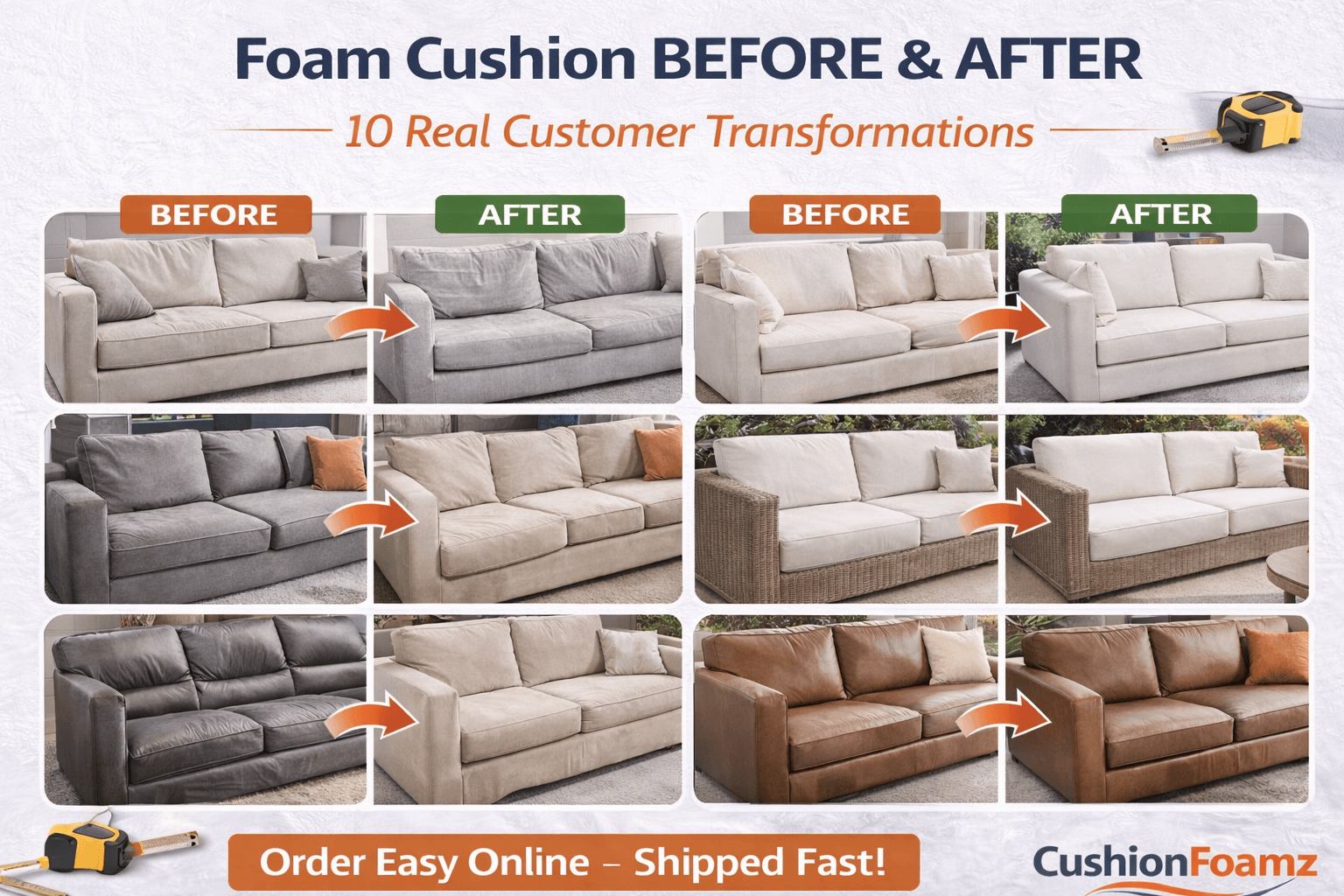
Nothing sells the value of foam replacement like seeing the results. You can read about density ratings and resilience properties all day, but the moment that convinces most people is seeing a sagging, deflated sofa cushion next to the same sofa with fresh foam — transformed from furniture you avoid to furniture you fight over.
These ten stories represent real-world projects across different furniture types, budgets, and foam applications. Each one includes the problem, what foam was ordered, the approximate cost, and the outcome. If your sofa, patio set, boat, or RV cushions look like any of these "befores," your "after" is just a few days away.
Transformation 1: The 12-Year-Old Pottery Barn Sectional
The problem: A large Pottery Barn sectional that was comfortable for the first four years, then progressively sagged. By year twelve, the seat cushions had compressed to roughly half their original thickness. Sitting in the center of any cushion meant feeling the frame. The family had been considering a $4,000 replacement.
What they ordered: Six seat cushions in 2.8 lb HR foam, 24 × 26 × 5 inches each, medium-firm. Dacron book wrap on each. Total foam cost: approximately $180.
The result: The sectional looked and felt like new — actually better than new, because the 2.8 lb HR foam is a significant upgrade from the ~1.8 lb foam Pottery Barn originally used. The family saved roughly $3,800 compared to buying a replacement sectional. The entire project took one afternoon.
For brand-specific foam replacement guidance, see our guide to replacement foam for popular sofas.
Transformation 2: The Sagging West Elm Harmony
The problem: A West Elm Harmony deep-seat sofa purchased two years prior. The deep seat design meant more leverage on the foam with every sit, and the factory 1.8 lb foam was already bottoming out. The owner could feel the support webbing through the cushion and had started avoiding the sofa in favor of a dining chair.
What they ordered: Three seat cushions in 2.8 lb HR foam, 28 × 24 × 5 inches, medium-firm. No batting (the original covers were already snug). Total foam cost: approximately $82.
The result: Immediate transformation. The deep-seat design that was originally appealing but had become uncomfortable was restored to its intended feel — spacious and supportive rather than spacious and collapsing.
For tips on how to fix a sagging couch, this is the approach that actually works permanently.
Transformation 3: The Waterlogged Boat Cushions
The problem: A 26-foot cabin cruiser with cockpit bench cushions that had been absorbing water for three seasons. The cushions weighed at least triple their dry weight and had developed visible mold despite multiple cleaning attempts. The musty smell permeated the entire cockpit area.
What they ordered: Four cockpit bench cushions in Dry Fast outdoor foam, various sizes (the longest at 48 × 20 × 3 inches), medium firmness. Total foam cost: approximately $240.
The result: Complete elimination of the water and mold problem. After the first rain, the owner watched water drain straight through the new cushions and was amazed to find them dry to the touch fifteen minutes later. Three seasons later, zero mold and zero odor.
For the complete guide to marine foam replacement, see our boat cushion foam guide.
Transformation 4: The RV Dinette That Doubled as a Torture Device
The problem: A 2019 travel trailer with factory dinette cushions made from approximately 1.2 lb foam at 2.5 inches thick. The foam was so thin and low-quality that sitting through a card game was uncomfortable, and sleeping on the converted dinette bed was genuinely painful. The owner had resorted to adding folded blankets on top of the cushions as padding.
What they ordered: Two dinette bench cushions in 2.8 lb HR foam, 44 × 18 × 4 inches each, medium-firm. Two back cushions at 44 × 14 × 3 inches. Total foam cost: approximately $68.
The result: The dinette went from the least popular spot in the camper to a genuine comfort zone. Guests stopped complaining about the sleeping arrangement. The 4-inch thickness with medium-firm density was the sweet spot — supportive enough for sitting upright at meals, cushioned enough for sleeping.
For the full RV foam guide with recommendations for every camper surface, see our RV cushion upgrade guide.
Transformation 5: The Patio Set That Got a Second Life
The problem: A five-piece aluminum patio conversation set that was structurally perfect — the frames had decades of life left — but the cushions were destroyed after three seasons of Pacific Northwest rain. The owner was about to buy an entirely new patio set for $2,000 because replacement cushions from the manufacturer cost $800 and would have the same standard foam that failed in the first place.
What they ordered: Four seat cushions and four back cushions in Dry Fast outdoor foam, medium firmness. Seat cushions at 24 × 24 × 4 inches, back cushions at 24 × 20 × 3 inches. Total foam cost: approximately $225.
The result: The original covers were still in good condition (the Sunbrella fabric held up even when the foam inside failed), so the owner simply swapped the foam. Total savings versus a new patio set: roughly $1,775. The Dry Fast foam drained perfectly through the first rainy season without a hint of the waterlogging that destroyed the original foam.
Our patio furniture foam replacement guide walks through the complete process for outdoor cushion upgrades.
Transformation 6: The Vintage Mid-Century Sofa Restoration
The problem: A 1960s Danish modern sofa purchased at an estate sale. Beautiful teak frame, original upholstery in decent condition, but the foam was utterly shot — six decades of use had reduced it to crumbling yellow dust. The restoration goal was to bring the sofa back to usable condition without altering its vintage character.
What they ordered: Two seat cushions and two back cushions in 2.8 lb HR foam, custom-measured from the original cushion covers. Dacron book wrap to replicate the original cushion profile. Total foam cost: approximately $95.
The result: The sofa went from a display piece that nobody could sit on to a functional daily-use seat that looks exactly as the original designer intended — but with foam that is objectively better than what was available in the 1960s. The measuring guide was critical for this project because the original foam was so degraded it could not be measured — only the covers provided accurate dimensions.
Transformation 7: The Church With 45 Uncomfortable Pews
The problem: A church with 45 wooden pews that had never been cushioned. Elderly congregants were struggling to sit through 75-minute services, and several had stopped attending regularly due to back and hip discomfort.
What they ordered: 90 pew cushion sections (two per pew, meeting in the center) in 2.8 lb HR foam, various lengths × 17 inches deep × 2 inches thick. Foam cost for the complete project: approximately $6,200.
The result: Attendance from elderly members increased noticeably within the first month. The church received more positive feedback from this single improvement than from any other facility upgrade in recent memory. The volunteer sewing team made covers from a burgundy commercial upholstery fabric that matched the existing carpet.
For planning a similar project, see our church pew cushion guide.
Transformation 8: The 300-Pound Man Who Could Finally Enjoy His Sofa
The problem: A larger gentleman who weighed 310 pounds and had been through three sofas in eight years. Each one started comfortable and bottomed out within twelve to eighteen months. The foam in retail sofas simply could not handle his weight for extended daily use. He was considering having a sofa custom-built — a $5,000+ proposition.
What they ordered: Three seat cushions in 2.8 lb HR foam, 26 × 26 × 6 inches, medium-firm. The extra thickness (six inches instead of the standard five) was critical for preventing bottom-out at his weight. Total foam cost: approximately $90.
The result: For the first time in years, he could sit on his sofa for an entire movie without shifting, leaning, or feeling the frame. At the two-year mark, the foam showed minimal compression — a first for any sofa in his experience. The 2.8 lb density and 6-inch thickness were the combination that finally worked.
Our foam guide for heavier individuals provides specific recommendations by weight range.
Transformation 9: The Van Conversion Sleeping Platform
The problem: A Sprinter van conversion with a 2-inch foam sleeping platform that the builder had purchased from a craft store. The foam was adequate for the first few camping trips but compressed to almost nothing within six months of weekend use. Sleeping on it felt like sleeping on a carpeted board.
What they ordered: One sleeping platform slab in 2.8 lb HR foam, 54 × 76 × 5 inches, medium-firm. A second piece for the dinette at 40 × 16 × 4 inches. Total foam cost: approximately $160.
The result: The van went from a vehicle you tolerated sleeping in to a vehicle where the bed rivaled a decent hotel mattress. The 5-inch medium-firm HR foam provided the right balance of cushioning for sleeping and support for sitting during the day.
See our van life foam guide for detailed conversion recommendations.
Transformation 10: The Window Seat That Became the Family's Favorite Spot
The problem: A beautiful bay window in a family home that had been empty for years because no one could find a cushion that fit the three-segment window layout. Pre-made cushions were always the wrong size, and the bare wooden bench was uncomfortable and unused.
What they ordered: Three rectangular foam pieces in 2.8 lb HR foam, each segment approximately 36 × 18 × 4 inches, medium-firm. Dacron book wrap on each. Total foam cost: approximately $55.
The result: The bay window went from wasted space to the most popular reading spot in the house. The three sections fit perfectly because they were cut to the exact dimensions of each window segment. The family had a local seamstress make matching covers with ties for about $90, bringing the total project cost to under $150 for a custom built-in seat.
Our window seat cushion guide covers measuring and ordering for every bay window and bench configuration.
What These Transformations Have in Common
Every project in this collection shares the same pattern:
- The furniture itself was fine. The frames, covers, structures, and designs were all worth keeping. Only the foam had failed.
- The factory foam was inadequate. Every "before" traces back to manufacturer foam that was underspecified for the application — too low density, too thin, or wrong type for the environment.
- Custom-cut professional foam fixed it permanently. In every case, 2.8 lb HR foam (indoor) or Dry Fast reticulated foam (outdoor/marine) solved the problem for years rather than months.
- The cost was a fraction of the alternative. Total foam costs ranged from $55 to $240 for residential projects. The alternatives (new furniture, professional reupholstering) would have cost five to twenty times more.
For the full cost comparison between foam replacement and other options, see our sofa cushion foam cost guide.
Your Transformation Is Next
Every one of these projects started where you are right now — looking at worn-out cushions and wondering if replacement foam actually works. It does. And the process is simpler than you expect: measure the covers, order custom-cut foam, insert, and enjoy.
Ready to start your transformation? Build your custom cushion →
For the complete step-by-step process, begin with our couch cushion replacement guide. Not sure which foam type you need? Our indoor vs. outdoor foam comparison makes the choice clear.