Indoor vs. Outdoor Foam: How to Choose the Right Cushion Foam
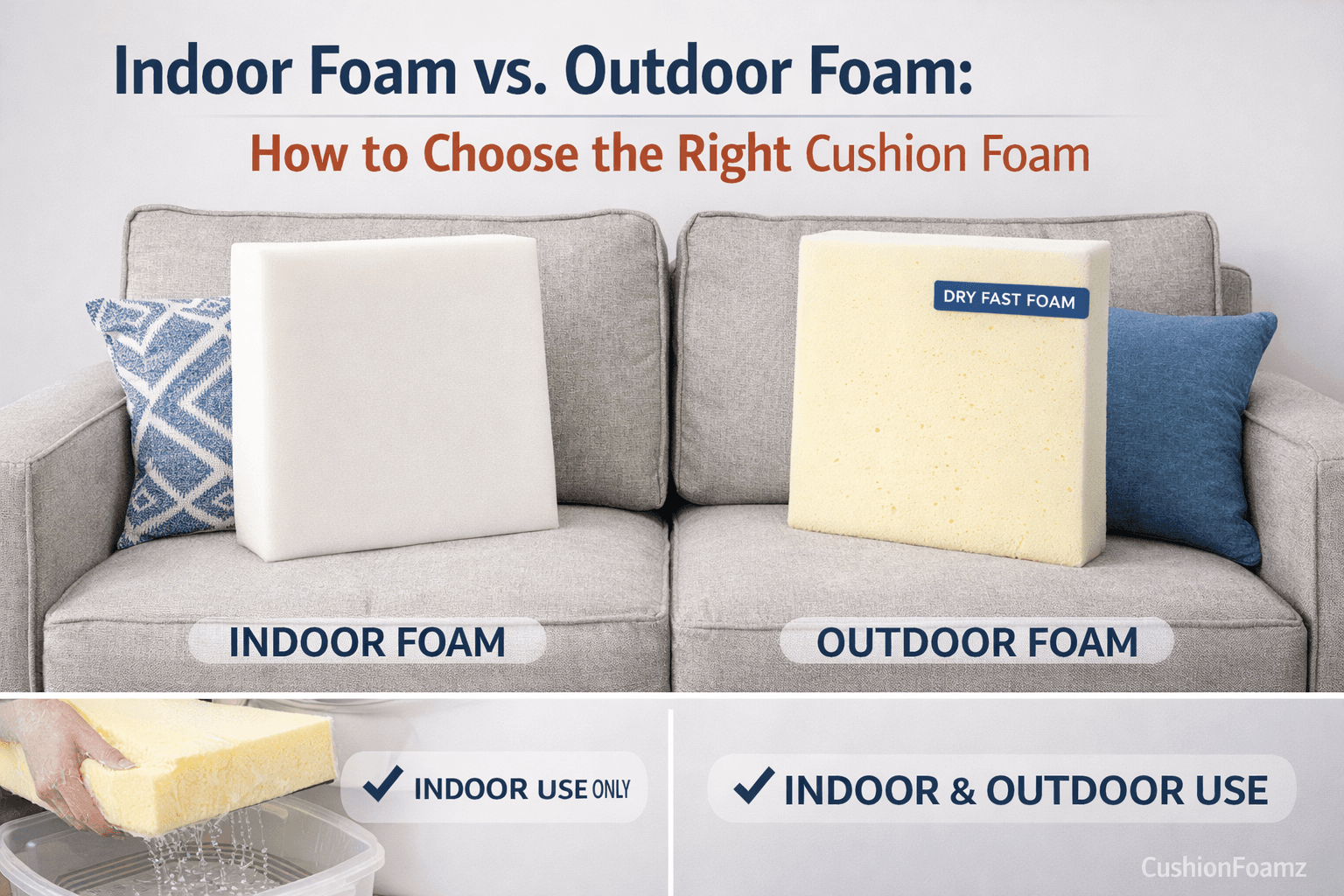
Not all polyurethane foam is built for the same environment. The foam that feels incredible on your living room sofa will fail quickly on a patio, boat, or pool deck — not because it is “cheap,” but because closed-cell structure and water retention are the wrong physics for wet use.
CushionFoamz carries two foam families on purpose: high-resiliency (HR) indoor foam for dry seating, and Dry Fast reticulated outdoor foam for anywhere moisture is part of the picture.
This guide explains the difference in practical terms so you order once and get years of performance.
Quick Comparison
| Indoor HR foam (2.8 lb/ft³) | Outdoor Dry Fast foam | |
|---|---|---|
| Best for | Sofas, chairs, window seats, RV/boat interiors that stay dry | Patio, pool, open boat seats, outdoor dining |
| Water behavior | Absorbs and holds moisture if soaked | Drains through; dries quickly |
| Comfort for sleeping / deep seating | Excellent pressure relief and recovery | Good for seating; thinner profiles common outdoors |
| Certification | CertiPUR-US | CertiPUR-US |
Why Standard “Indoor” Foam Fails Outside
Outdoor cushions face rain, dew, splashes, humidity, and rinsing. Standard open-cell foam traps water in the cell walls. That leads to:
- Long dry times
- Mold and mildew
- Accelerated breakdown (hydrolysis) in worst cases
Dry Fast foam is reticulated: the cell windows are opened so water flows through instead of pooling. That is why it is the standard for marine and outdoor seating.
When Indoor HR Foam Is the Right Choice
Use indoor HR foam when the cushion stays dry:
- Living room and bedroom seating
- Window seats and banquettes inside the home
- RV and van interior dinettes and beds inside a conditioned or sheltered space
- Boat cushions that live inside the cabin and are not exposed to rain
For comfort and longevity in those applications, 2.8 lb HR foam outperforms typical retail-grade 1.5–1.8 lb foam. Technical background: HR vs HD foam and density & firmness.
When Dry Fast Foam Is Mandatory
Use Dry Fast when any of these apply:
- Cushion sits in the open air (even “under cover” patios still get humidity and blowing rain)
- Boat seating exposed to spray or rain
- Pool furniture, outdoor kitchens, restaurant patio seating
- Any cushion you would hose off to clean
For patio projects, our patio furniture foam replacement guide goes deeper on thickness and maintenance. For boats: boat cushion foam replacement.
Firmness and Thickness Rules of Thumb
Outdoor seating: Medium to firm at 3–4 inches for dining and lounge seats is typical; bar stools and small seats often use firm foam so weight does not bottom out on a small footprint.
Indoor sofas: Medium-firm is the professional default for seat cushions; backs are often slightly softer or thinner.
Ordering the Correct Foam
- Decide indoor vs outdoor using the rules above — when in doubt for anything that might get wet, choose Dry Fast.
- Measure your covers (not the old foam).
- Use the configurator — select foam type, shape, and dimensions.
Frequently Asked Questions
Can I use indoor foam on a covered patio?
We do not recommend it. Humidity, condensation, and wind-driven rain still reach “covered” cushions. Dry Fast removes that risk.
Can outdoor foam be used indoors?
Yes, but you usually give up some seating comfort versus HR at the same thickness. If the cushion is strictly indoor, HR is the better experience.
Does CertiPUR-US apply to both?
Yes — both foam types we sell meet CertiPUR-US requirements. Details: what is CertiPUR-US.
The Bottom Line
Dry environments → HR indoor foam. Anything that gets rained on, splashed, or hosed → Dry Fast outdoor foam. Picking the right family matters more than squeezing an extra half inch of thickness.
Start your order: Custom foam configurator →
For the full DIY install process, continue with how to replace foam in couch cushions.